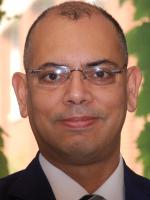
I am delighted to share that the National Science Foundation has funded a new collaborative project that Mohammad Wardat and I will pursue together. Mohammad earned his PhD with our group and is now an Assistant Professor at Oakland University, so this award is also a happy continuation of a long and productive collaboration.
The project, Collaborative Research: SHF: Small: Fault Localization for Deep Learning, is supported by NSF’s Directorate for Computer and Information Science and Engineering. It is a collaborative award across Tulane and Oakland, totaling roughly $600,000 over three years.
Deep neural networks now sit behind decisions in healthcare, transportation, and many other areas, yet they can carry faults that undermine their safety and reliability. The fault localization techniques that software engineers have refined over decades do not transfer cleanly to neural networks, because traditional software and deep learning rest on very different computational models, and a “bug” means something different in each. Our project takes on that gap. We will watch how a model behaves while it trains, design compact abstractions of that behavior to pinpoint where things go wrong, and cut the cost of retraining so that debugging deep learning becomes faster and more accessible. The hope is straightforward: safer, higher-quality AI software, with errors caught early rather than late.
This work builds directly on Mohammad’s doctoral research, including DeepLocalize, our first approach for bug localization in deep neural networks. I am grateful to NSF for the support, and excited to get started.